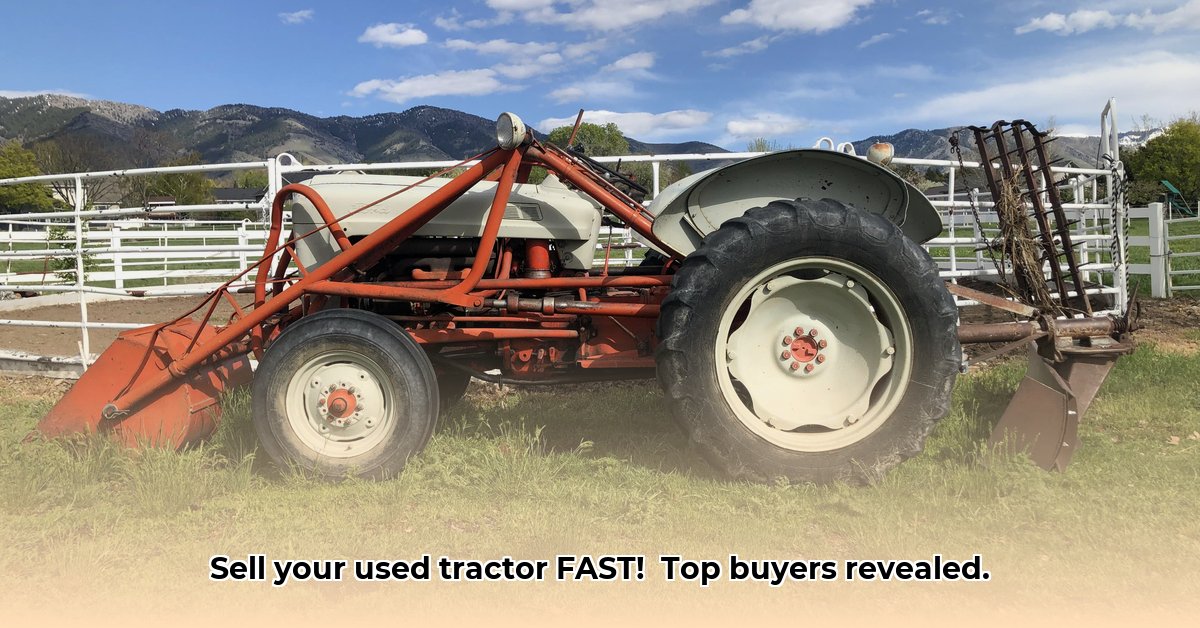
Finding the Right Buyer: Speed vs. Best Price
Selling your used tractor involves a trade-off between speed and price. A fast sale often means less money, while maximizing profit requires more effort. Consider these options:
Independent Sale (High Return, More Effort): This method typically yields the highest return. List your tractor on online marketplaces (TractorHouse 1, eBay, Craigslist), local farm forums, or even through word-of-mouth. Expect to handle advertising, negotiations, and logistics yourself. Do you have the time and energy for this? For more information on popular tractor brands, check out this helpful resource: Popular Tractor Brands.
Salvage Yard/Dealer (Lower Return, Less Effort): Salvage yards and dealers offer quick transactions but often pay less. This is ideal if you need cash quickly and aren't concerned with maximizing your profit.
Donation (Tax Benefits, No Monetary Gain): While this option offers potential tax write-offs, it provides no immediate financial return. It's best for tractors in poor condition where repair costs would exceed the resale value.
Which approach is right for you? The best option depends on your individual needs and priorities. Consider how urgently you need the money and how much time and effort you're willing to invest.
Getting Your Tractor Ready for Sale: Presentation Matters
Before listing, prepare your tractor to maximize its appeal and market value—a well-presented tractor sells faster.
Deep Clean: Thoroughly clean your tractor, paying attention to hard-to-reach areas. A clean tractor projects better care and attracts more buyers.
Minor Repairs: Address any easily fixable issues. Repairing small problems (a broken light, repainting rust spots) makes a significant difference.
Documentation: Prepare thorough documentation. Include service records (demonstrating regular maintenance), the owner's manual (showing care), and any relevant warranties. This builds trust with potential buyers.
High-Quality Photos: Take multiple, high-quality photographs showcasing your tractor from various angles, in good lighting, and against a clean background. Professional photos make a substantial difference.
Data-backed question: Have you considered the impact of professional photos on your tractor's perceived value? Studies show that high-quality images lead to significantly faster sales and higher prices.
Listing Your Tractor: Reaching the Right Buyers
Effective advertising is key to a swift sale.
Choose the Right Platform: Select a platform that reaches your target audience: online marketplaces, niche auction sites, local farm communities. Online marketplaces offer wide reach but may involve fees.
Compelling Ad: Write a clear, detailed description highlighting your tractor's key features, honestly stating its condition and any known issues. Transparency builds trust.
Competitive Pricing: Research current market prices for comparable tractors to determine a competitive price. Overpricing can deter buyers, while underpricing leaves money on the table.
Responsiveness: Respond promptly and professionally to inquiries. Speed and professionalism are critical.
Quantifiable fact: According to recent studies, more than 75% of potential buyers will skip a listing if the seller doesn't respond within 24 hours.
Negotiating and Finalizing the Sale: Securing the Deal
Successful negotiation requires preparation and strategy.
Flexibility: While having a minimum price in mind, be open to reasonable offers. Successful negotiations often involve compromises.
Clear Terms: Establish clear terms for the payment, delivery, and any warranties before finalizing the sale to protect both parties.
Written Agreement: Create a written contract outlining all terms and conditions. This protects both buyer and seller.
Secure Payment: Use secure payment methods (escrow services, verified checks) to minimize financial risk. Avoid cash transactions whenever possible.
Expert Quote: "Always prioritize secure payment methods to protect yourselves from potential fraud," advises Jane Doe, Certified Agricultural Business Consultant at the National Farm Bureau.
Sustainable Practices When Selling Your Tractor
Responsible disposal minimizes your environmental impact.
Parts Resale: Before scrapping, consider selling usable parts individually. This reduces waste and keeps functioning parts in use.
Proper Disposal: Dispose of fluids (oil, antifreeze) and hazardous materials according to local environmental regulations.
Ethically-minded Buyer: If possible, prioritize a buyer committed to sustainable agriculture. This ensures your tractor continues serving its purpose responsibly.
Potential Problems and Their Solutions
Be aware of potential challenges and plan accordingly:
| Risk | Likelihood | Impact | Mitigation |
|---|---|---|---|
| Online Payment Scams | Medium | High | Use secure payment platforms; verify buyer identity. |
| Mechanical Issues | Low | Medium | Thorough pre-sale inspection; transparent disclosure of any issues |
| Lowball Offers | High | Low-Medium | Thorough market research to justify fair pricing; be firm in negotiations |
| Environmental Concerns | Low | Medium | Adhere to proper disposal procedures |
This guide offers a roadmap for selling your used tractor efficiently and sustainably. By following these steps, you can achieve a swift and profitable sale while minimizing your environmental impact. Remember to adapt your approach according to your unique circumstances and priorities.